
The City
Neighborhoods
The Lay of the Land
A City Organized Around the River
The Grand River bisects the city into east and west. Most visitors spend their time east of the river — Downtown, Heritage Hill, East Hills — but the West Side is emerging and worth crossing for. These are the neighborhoods to understand before you arrive.
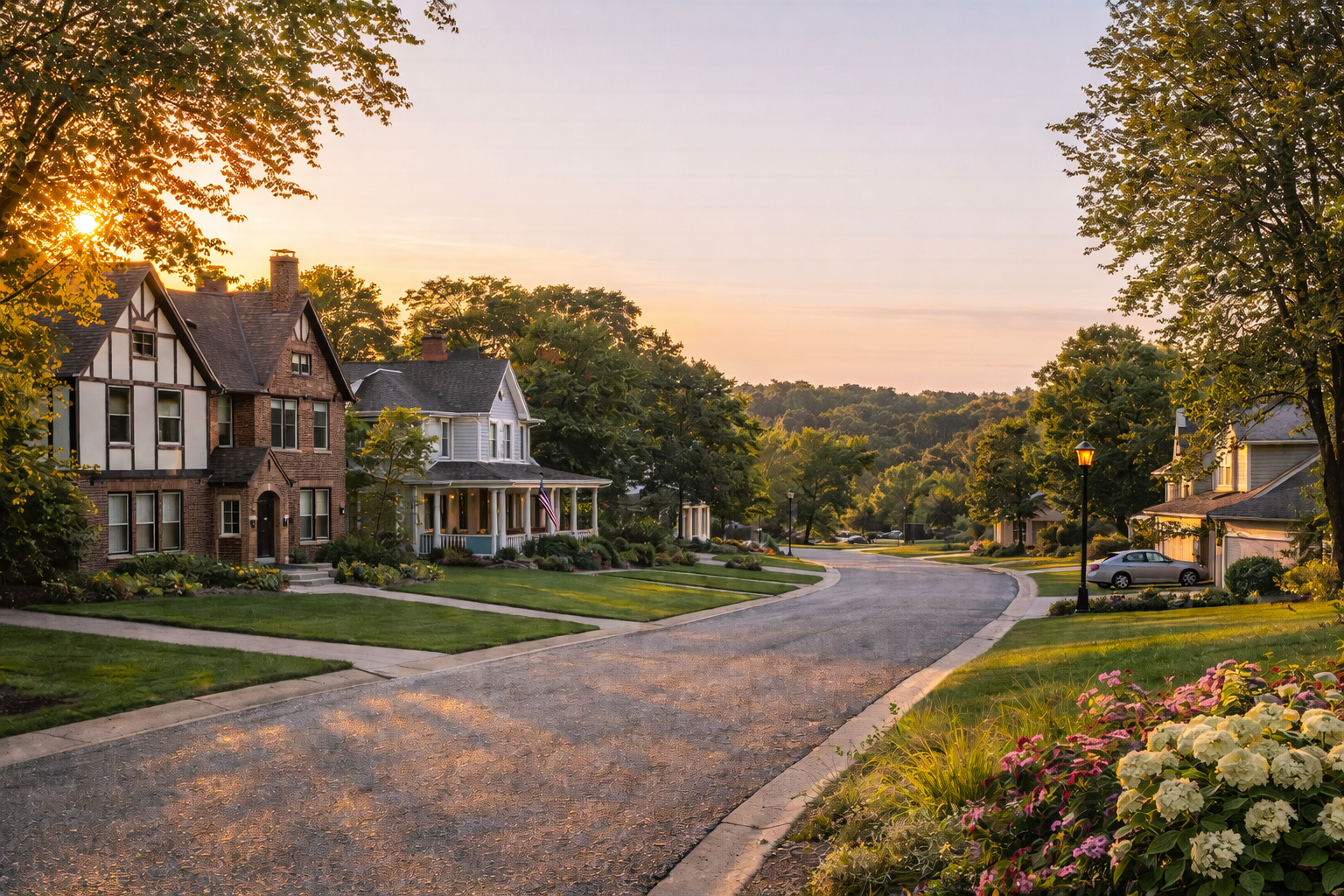
Victorian grandeur on a walkable hill
Heritage Hill
One of the largest and best-preserved historic districts in the Midwest. Walk the streets of Heritage Hill and you'll understand how seriously Grand Rapids took its prosperity — 1,300 properties, 60 architectural styles, and the quiet pride of a city that built itself well. The annual home tour in October is the best way in.
Best for: Architecture, photography, history walks, autumn foliage
Where the creative class eats and drinks
East Hills / Eastown
The neighborhood east of downtown where you'll find the independent restaurants, the boutique bars, Brewery Vivant, and the city's most walkable commercial strip along Wealthy Street. This is where Grand Rapids feels most like a city that belongs to its residents rather than its visitors — and that's precisely what makes it worth visiting.
Best for: Dining, craft beer, independent shops, Saturday mornings

The cultural heart of the city
Downtown Arts District
The area around the Grand Rapids Art Museum, DeVos Center, and the Grand River is where you'll spend most of your cultural time. The GRAM, ArtPrize exhibitions, the new Acrisure Amphitheater, and the best hotels all sit within comfortable walking distance. During ArtPrize season (September–October), it becomes one of the most concentrated public art experiences in the world.
Best for: Art, culture, hotels, river walks, ArtPrize

Industrial heritage and neighborhood pride
West Side / Westside Connection
Cross the Grand River and you're in the West Side — the neighborhood that has been Grand Rapids' working-class anchor for over a century and is now home to some of the city's most interesting new dining and bar openings. It hasn't been discovered yet, which is half the reason to go.
Best for: Emerging dining scene, local bars, neighborhood feel

Where research meets tree-lined streets
Medical Mile / Midtown
The stretch of Michigan Street that has become one of the country's most significant biomedical research corridors. On the residential streets that flank it — Paris, Diamond, LaGrave — you'll find quiet Victorian blocks that feel like extensions of Heritage Hill but with fewer visitors and more authenticity.
Best for: Quiet walks, residential architecture, proximity to everything